.png?w=1928&h=815)

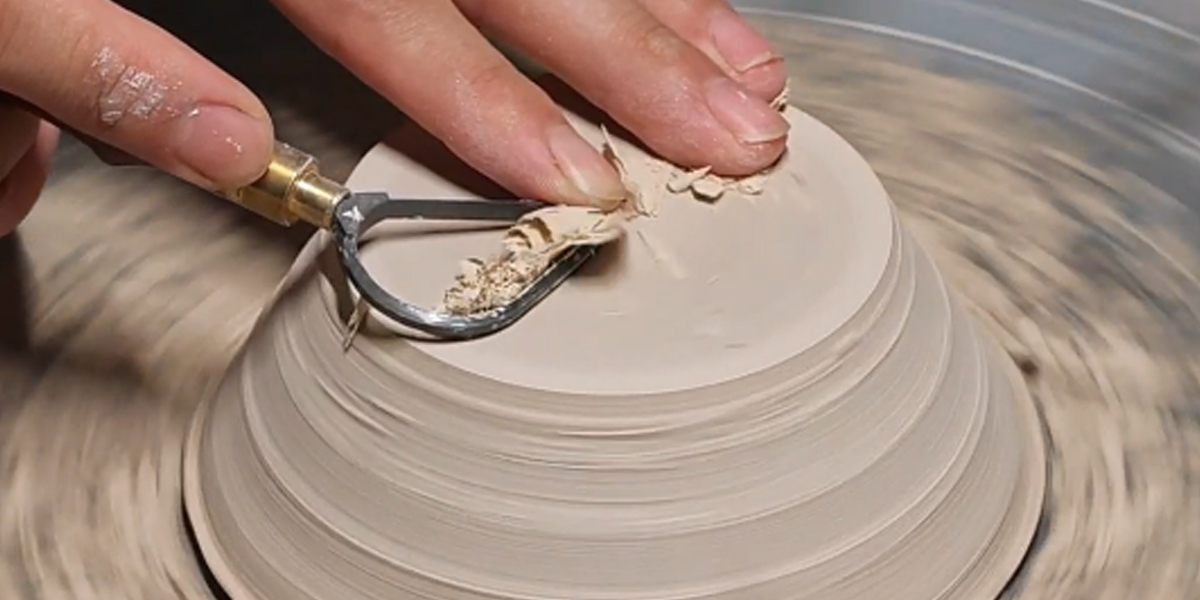
Carbide pottery trimming tools can produce clean cuts, smooth curves, and well-defined foot rings with very little pressure.
However, they may feel different if you are used to a worn or more flexible steel loop tool. The carbide cutting edge responds quickly to changes in pressure, angle, and hand movement. Pushing too hard can cause the tool to dig into the clay, remove too much material, or chatter across the surface.
The goal is simple: start with light contact, find the cutting angle, and let the edge do the work.
Start with the Right Clay Stage
Before changing your grip or questioning the tool, check the clay.
Digitalfire describes leather-hard clay as firm enough to handle without easily pushing it out of shape, but not so dry that trimming and refining the foot ring become difficult.
If the clay is too wet, it may:
-
Stick to the cutting head
-
Smear instead of cutting cleanly
-
Flex under pressure
-
Build up around the tool
If the clay is too dry, it may:
-
Produce dust or brittle chips
-
Resist the cutting edge
-
Chip around the foot ring
-
Cause unwanted vibration or chattering
Ceramic Arts Network notes that unintended chattering is often related to clay being either too wet or too dry for trimming.
Make a light test cut before removing more clay. Clean curls or short shavings usually indicate a workable trimming stage. Sticky buildup, hard flakes, or dust suggest that the moisture level needs attention.
How Much Pressure Should You Use?
Carbide trimming tools need less pressure than many potters expect.
Begin with the cutting edge barely touching the clay. Increase the contact gradually until a clean shaving appears. Once the tool begins cutting smoothly, maintain that pressure and move through the clay in a steady pass.
Avoid trying to reach the finished shape in one deep cut. Several shallow passes provide better control and reduce the chance of:
-
Sudden gouges
-
Chatter marks
-
Removing too much clay
-
Moving the pot off center
-
Placing unnecessary stress on the cutting head
In our own trimming tests, excessive pressure is one of the first things we check when a carbide tool suddenly grabs the clay.
How to Find the Cutting Angle
The sharpened edge needs to meet the clay at an angle that allows it to cut rather than rub or dig in.
If the tool is held too flat, it may scrape across the surface. If the angle is too aggressive, the edge may catch and cut deeper than intended.
There is no single angle that works for every pottery trimming tool, clay body, or part of the pot.
Start with light contact and rotate the handle slightly until the edge begins producing a smooth shaving. Make small adjustments rather than changing the angle suddenly.
When approaching a foot ring, corner, or curved transition, reduce the depth of the cut before changing direction.
How to Prevent Chattering
Chattering occurs when the cutting edge repeatedly skips across the rotating clay instead of making a steady cut.
Clay moisture is one possible cause, but chattering can also result from poor centering, unstable hands, excessive pressure, unsuitable wheel speed, or too much of the cutting edge contacting the surface at once.
To improve control:
-
Make sure the pot is centered and securely held.
-
Hold the tool closer to the working end.
-
Support the trimming hand with your other hand.
-
Brace your fingers, hand, or forearm when possible.
-
Begin with a small contact area and a shallow cut.
-
Adjust the wheel speed gradually.
Ceramic Arts Network’s trimming guidance also emphasizes using the other hand as a stabilizer and supporting the arm while trimming. It notes that clay becoming too dry can cause the tool to chatter or vibrate on the surface.
When chattering begins, do not immediately press harder. Pause and check the clay, centering, hand support, pressure, and cutting angle.
Reduce the Contact Area When Control Feels Difficult
A broad carbide loop tool is useful for general clay removal and shaping larger surfaces. However, a wider cutting edge can contact more clay at once.
If the tool feels difficult to control:
-
Use a shallower pass.
-
Let only part of the cutting edge contact the clay.
-
Reduce the pressure.
-
Change to a smaller or more focused trimming tool.
Carbide hook tools and smaller detail trimming tools provide a more focused contact point around foot rings, edges, curves, grooves, and narrow areas.
Changing to a smaller cutting point is often more effective than forcing a large loop tool into a tight area.
Do Not Twist or Pry the Carbide Head
Tungsten carbide is extremely hard and wear-resistant, but it is not intended to flex like a thin steel loop.
Avoid:
-
Twisting the cutting head while it is in the clay
-
Pulling a hook tool sideways
-
Using the tool as a lever
-
Bending the carbide section
-
Striking it against the wheel head
-
Dropping it onto a hard floor
If the cutting edge catches, reduce the pressure and move the tool back along the direction of the cut. Do not twist the handle to force it free.
After trimming, remove clay from the cutting head and dry the tool before storage.
Quick Troubleshooting Guide
Clay sticks to the cutting head
The clay may still be too wet.
The tool produces dust or hard chips
The clay may be too dry.
The edge suddenly digs into the surface
Reduce the pressure and use a shallower cutting angle.
The tool chatters across the pot
Check the clay moisture, centering, hand support, wheel speed, and contact area.
The tool works normally on another pot
The clay condition or setup is probably the main issue.
The tool struggles on several properly prepared pots
Clean and inspect the cutting edge for clay buildup, wear, or damage.
Let the Carbide Edge Do the Work
Using a carbide pottery trimming tool does not require a completely different trimming technique. However, its sharp and rigid cutting edge makes excessive pressure and unstable movement easier to notice.
Start with light contact. Keep your hands supported, adjust the cutting angle gradually, and remove clay in controlled passes.
Once you become familiar with the response of the tungsten carbide edge, it becomes easier to control how much clay you remove and create a cleaner, more balanced form.
For more guidance, read Is Your Pottery Trimming Tool Dull—or Is the Clay Too Wet or Too Dry?
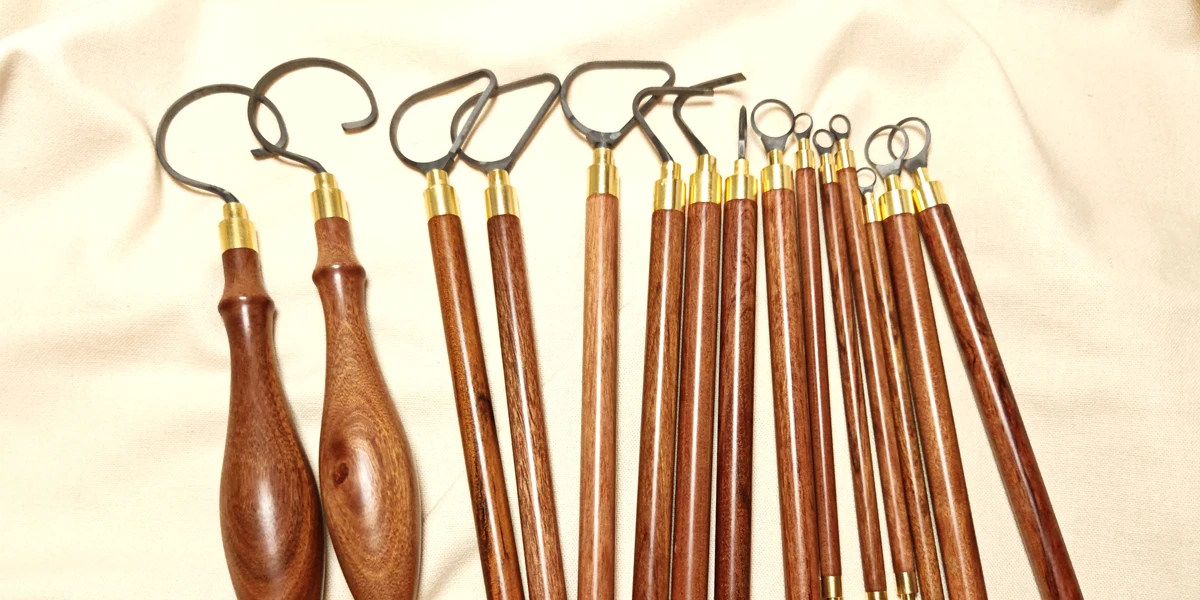
You can also explore KOVO TOOLS Carbide Loop Tools, Carbide Hook Tools, Detail & Cleanup Tools, and Pottery Tool Sets.
Frequently Asked Questions
Why does my carbide pottery trimming tool chatter?
Chattering can be caused by clay that is too wet or too dry, poor centering, unstable hands, excessive pressure, unsuitable wheel speed, or too much cutting edge contacting the clay.
Why does the tool suddenly cut too deeply?
The pressure or cutting angle may be too aggressive. Begin with the edge barely touching the surface and increase contact slowly until a clean shaving appears.
How much pressure should I use with a carbide trimming tool?
Use only enough pressure for the edge to produce a controlled shaving. Carbide tools should cut the clay rather than being forced through it.
Can carbide pottery trimming tools be used on dry clay?
Carbide has strong wear resistance and can work on firmer clay, but overly dry clay may still produce dust, chips, and chattering. Use shallow passes and avoid forcing or twisting the cutting head.